
On November 7, the Texas Senate’s Local Government Committee convened to discuss one of the state’s most pressing issues—rising housing costs. The meeting marked the committee’s final session on housing affordability before the 2025 legislative session begins. With lawmakers already aware of the growing housing crisis, committee members turned their focus to the key factors driving up costs and the legislative actions needed to address them.
At the heart of the discussion was the state’s severe shortage of affordable housing, an issue that is particularly acute in cities like Austin. Lt. Gov. Dan Patrick had tasked the committee with investigating housing affordability as an interim priority, and this hearing highlighted the urgency of the matter.
Senator Paul Bettencourt, committee chair, reflected on the legislature’s previous efforts to address housing costs, particularly the significant property tax cuts enacted last session. However, it quickly became clear during the hearing that while past efforts, like property tax reductions, have made some impact, the affordability crisis persists. This challenge remains a critical concern as Texas continues to experience rapid population growth, and the need for more affordable housing options becomes more urgent.
Testimony from Texas Comptroller Glenn Hegar
The hearing began with testimony from Texas Comptroller Glenn Hegar, who painted a concerning picture of the state’s growing housing affordability gap. Hegar’s remarks pointed to a troubling trend that has been accelerating over the past decade. While Texas once prided itself on being a more affordable state in terms of housing, the situation has been steadily worsening. Rising housing costs are no longer just a concern for major metropolitan areas but are now impacting smaller cities like Brownsville, McAllen, and El Paso, where median-income families are now unable to afford the median-priced home. This broadening affordability gap has placed significant strain on families across the state, with nearly one-third of Texas households spending over 30% of their income on housing.
Chairman Bettencourt validated his comments by saying, “I guess the moral here is that you either embrace growth and you want to have a growing economy, or you don’t. And we do hear a lot of people that say they don’t want to grow. Well, if you’re not growing, you’re stagnant or you’re declining. And as long as Texas remains the job, you know, creation engine long term in the country, then these are problems that have to be resolved.”
State Investment in Housing
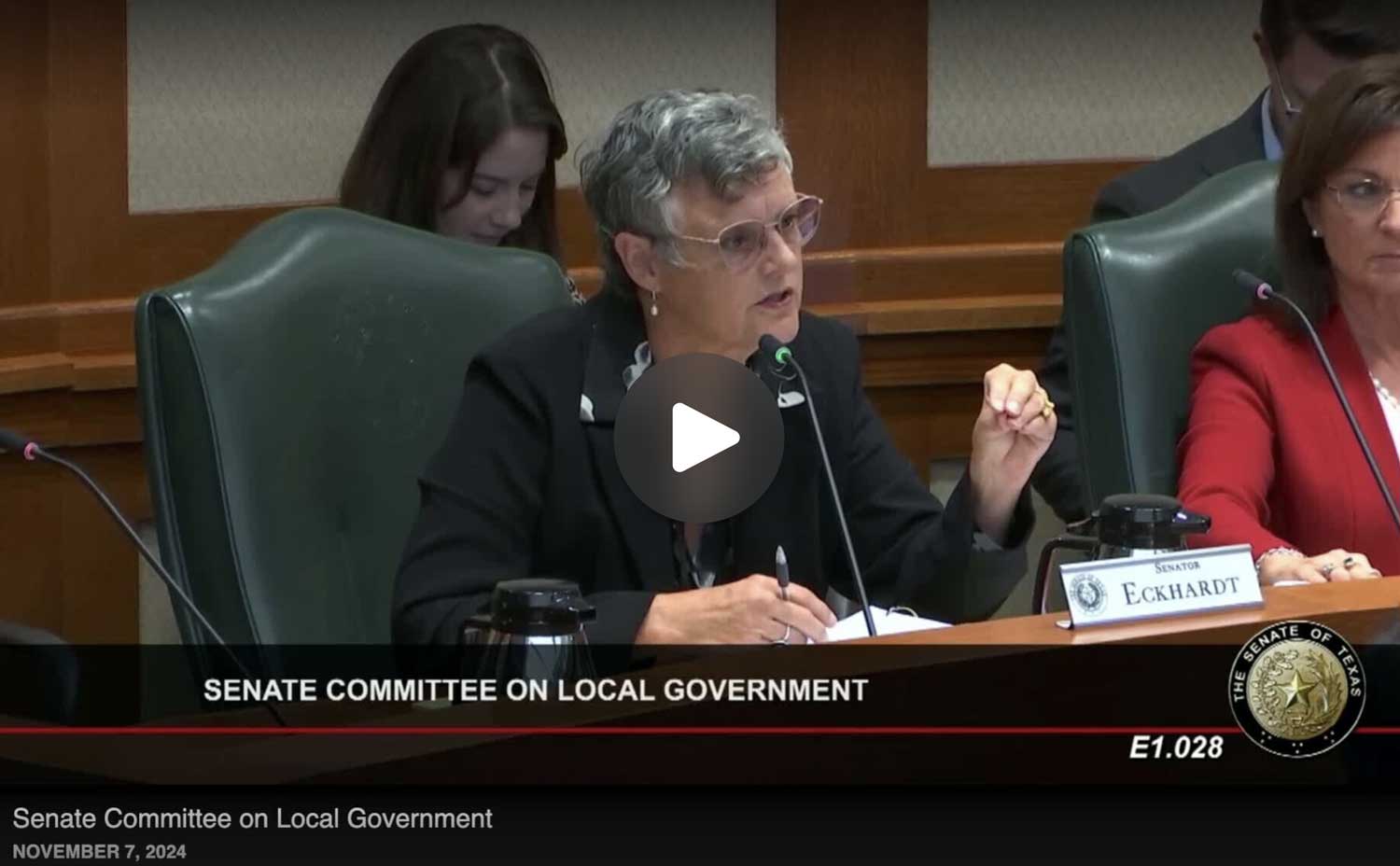
A key exchange during the hearing highlighted the lack of sufficient state funding for affordable housing. Senator Sarah Eckhardt asked Comptroller Hegar whether any analysis had been conducted comparing federal, state, and local contributions to affordable housing in Texas. Comptroller Hegar acknowledged that no formal analysis had been done but noted the growing interest in the issue from various groups.
Senator Eckhardt pressed further, questioning whether it was fair to say that the federal government and local entities were contributing the lion’s share of funding. Comptroller Hegar agreed, though he cautioned that the effectiveness of those programs was still in question. Senator Eckhardt underscored the issue, stating, “You can’t make an impact if you don’t make an investment,” emphasizing the need for the state to increase its funding commitment.
TAAHP Testimony: Affordable Housing is Critical to Economy
TAAHP Board President Nathan Kelley was among the key witnesses providing testimony at the hearing, where he highlighted several legislative priorities central to tackling the state’s housing crisis. The discussion not only focused on the high cost of housing but also underscored the complex factors contributing to the issue and the solutions that will be needed in the upcoming legislative session.
Kelley emphasized the economic importance of affordable housing, particularly through the federal Housing Tax Credit program, which has contributed $24.5 billion to the Texas economy since its inception. He stressed that while much of the focus in Texas has been on single-family housing affordability, rental housing also plays a crucial role. “Texas is home to 9.8 million renters, and we must ensure that we’re supporting the creation of affordable rental units to meet this growing demand,” Kelley said.
— The remainder of this post will break down the key legislative topics discussed during the hearing, highlighting the testimony of multiple speakers on each issue. Through this testimony, lawmakers gained a deeper understanding of the multifaceted nature of the housing affordability crisis, and the potential policy solutions that could help address it.
Housing Tax Credits: Data Shows Significant Downward Trend in Development
9% Housing Tax Credit Program: Kelley noted a troubling trend: the production of new affordable rental units has significantly slowed in recent years. “From 2012 to 2021, we averaged about 5,200 new units a year through the 9% Housing Tax Credit program. Since then, that number has declined to just 3,000 units in 2023 and an estimated 3,700 units in 2024,” Kelley said, pointing to factors like rising interest rates, higher real estate taxes, and escalating insurance costs as major barriers to new construction.
4% Housing Tax Credit Program: Teresa Morales, Director of Multifamily Bonds at Texas Department of Housing & Community Affiars (TDHCA), began by detailing the Multifamily Private Activity Bond Program. Morales explained that for the 2024 program year, the state’s bond ceiling is $3.8 billion, with approximately $1 billion set aside for multifamily housing. She highlighted that in 2023, the combined bond and tax credit program financed 10,832 affordable housing units, which includes both new construction and preservation projects. However, the program is facing heavy demand. According to Morales, the multifamily bond ceiling is oversubscribed 2-to-1, with TDHCA’s specific allocation being 1.5 times oversubscribed. When asked about this by Senator Bettencourt, she confirmed that while the demand is strong, the department is managing the oversubscription by continuing to issue bond reservations as available.
Texas State Housing Tax Credit: Kelley also advocated for expanding the Texas State Housing Tax Credit, which was introduced in the 88th legislative session. He called for increasing the state’s funding commitment to better meet the growing demand for affordable housing. Senator Eckhardt suggested expanding the program to include households earning up to 80% of the area median income (AMI), a move Kelley supported, arguing it would better address the needs of a wider range of families, especially those that are at risk of falling into homelessness.
The Two-Mile Same Year Rule: Another important topic discussed was the “two-mile rule,” which restricts the issuance of new housing tax credit developments within two miles of an existing project. Kelley called for reform of this rule, suggesting that cities should be given more flexibility to reduce the radius in areas experiencing rapid gentrification or those in need of revitalization. Senator Eckhardt voiced her support for this idea, noting that some areas in major metro regions are on the “bubble” of gentrification.
Appraisals of Housing Tax Credit Developments
During his testimony, Kelley emphasized how the current appraisal system is making it increasingly difficult to build and maintain affordable housing in the state. He shared that the increase in assessed property values has been unsustainable, particularly in affordable housing programs where rent limits are imposed.
Later in the hearing, Brent South, Chief Appraiser with the Texas Association of Appraisal Districts (TAAD), provided important insight into how the appraisal process could be restructured to better serve the needs of affordable housing. He emphasized that any new legislation must be clear, specific, and narrowly tailored to avoid exploitation or misuse.
Tax Exemption Programs for Affordable Housing
During the hearing, critical discussions took place around the operations of Housing Finance Corporations (HFCs) and Public Facility Corporations (PFCs) in Texas, two entities central to the state’s affordable housing development strategy. While both play a key role in financing affordable housing projects through tax incentives and bond programs, concerns about their transparency, accountability, and the impact on local governance were brought into sharp focus.
Housing Finance Corporations (HFCs)
One of the most pressing issues raised at the hearing was the practice of HFCs using property tax exemptions in counties outside their home jurisdictions. This practice has raised serious questions about transparency and the fairness of such tax breaks, particularly since these exemptions are granted without the approval or input of local governments.
Chairman Bettencourt, a vocal advocate for reform, reiterated his commitment to addressing this issue.
“That’s going to be top of my priority list to get that bill passed… There may not be a lot of other things moving until that bill gets passed because that’s got to stop.”
Public Facility Corporations (PFCs)
During her testimony, Wendy Quackenbush, Director of Multifamily Compliance at TDHCA, outlined the findings from 14 audits of PFC developments, revealing that 10 of these audits included adverse findings related to non-compliance with affordable housing regulations. These issues ranged from gross rents exceeding prescribed limits and household incomes surpassing the allowable threshold at move-in, to failures to meet the required number of affordable units as stipulated in the regulatory agreements. TDHCA has already made strides in addressing these issues, issuing detailed letters to PFCs that have failed to comply with regulatory standards, and offering guidance on how to correct non-compliance.