
On November 7, members of TAAHP’s Qualified Allocation Plan (QAP) Committee presented powerful testimony at the Texas Department of Housing and Community Affairs (TDHCA) hearing, urging the board to reconsider the newly proposed thresholds for the “Quantity of Low-Income Units” scoring category that are likely to reduce affordable housing development in Texas. These thresholds, which required developers to increase the number of low-income units by 10% or 20% compared to previous rounds, were seen as a financial burden that could jeopardize the viability of affordable housing projects across Texas. Developers warned that the higher thresholds, combined with rising costs and limited funding, would result in financing gaps, delays, and ultimately, fewer affordable units being built.
TAAHP Board President Nathan Kelley aptly summarized the dilemma, stating,
“Supply is the issue. And speeding units to the market is the way that we solve the supply issue. This point scoring item slows our ability to get supply to the market… It causes us to add time to the cycle, and at the end of the day, exacerbates the affordability problem.”
His testimony, along with those of other TAAHP members, made it clear that the proposed changes would lead to unnecessary complexity in financing, further delays in project timelines, and a diminished ability to meet the state’s affordable housing needs.
Thanks to the hard work and advocacy of TAAHP’s QAP Committee, the board voted to adjust the thresholds to 5% and 10%—a step in the right direction to address the financial realities of affordable housing development. We want to thank the board for working with us to find a more reasonable approach that supports both the goal of increasing unit production and the need for financially sustainable projects.
Below, we break down the key testimonies from each TAAHP speaker to give you a deeper understanding of the issues at hand.
TAAHP Members Testify: New Policy Likely to Reduce Affordable Housing Development in Texas
Karsten Lowe – Co-chair, TAAHP QAP Committee
Lowe, co-chair of TAAHP’s QAP committee, opened up TAAHP’s testimony by addressing the fundamental issues that developers face with the new scoring criteria. He explained that many developers are finding it increasingly difficult to make projects financially viable due to the current high thresholds for Quantity of Low-Income Units scoring item.
Lowe’s testimony highlighted the financial risks developers face, noting that the new thresholds often push projects beyond what can be funded, even when developers already commit to substantial increases in the number of low-income units. “Developers often spend upwards of $100,000 to take the risk to submit an application for this program. We understand that that is a part of playing in this business. But if you are trying to spend this money and take that level of risk, you have to be cognizant about what are your chances you think of scoring a competitive application.” Lowe stressed that while developers are eager to build, the new rules are turning affordable projects into financial gambles.

Sarah Andre – Structure Development
Andre shared a real-world example from a recent 108-unit development in Houston to illustrate how rising development costs are making it increasingly difficult to close deals. She detailed how the same project that cost $22.5 million to develop in 2022 now costs $26.2 million in 2024—a 17% increase. Despite this jump in costs, the mortgage only increased by 0.1%, resulting in a financing gap of $3.2 million that could not be covered by a deferred developer fee. If you add the impact of actual expenses, the gap increases to $4.8 million. Then, they lost a million in loan proceeds and $600,000 in equity pricing. When she added 10% more units, the gap grew even further to $6.2 million. “Bottom line, you just can’t buy as much as you used to be able to buy with the same amount of money.”

Robbye Meyer– Arx Advantage
Meyer shared her perspective on the highly competitive nature of the QAP scoring system. Meyer emphasized that when sourcing sites for her clients, she focuses exclusively on those that can achieve maximum scores. The goal is not only to secure the highest possible points but also to position projects to be competitive in tie-breaks, which often determine funding outcomes. She pointed out that this intense competition leads to projects “all ending up on top of each other,” where many developers with similar scores are vying for limited funding. Ultimately, Meyer stressed that scoring has become an essential part of the process: “Score is not a matter of an option. It’s a requirement for us to be able to compete with each other.”

Sallie Burchett– Structure Development
Burchett provided an insightful analysis of how developers are engaging with the new scoring criteria. She reported that nearly all applicants took advantage of available points, especially those in competitive positions. The only exceptions were a few specific cases, such as in Region 3 rural, where neither application took the points, and a deal in the Region 6 Urban that did not take the point and scored at the bottom. Burchett summarized, “Basically, everybody but one took this one [point] category,” illustrating just how central scoring is to project success in the current QAP landscape.
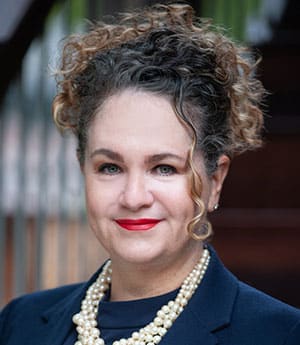
Justin Meyer – Arx Advantage
Meyer discussed the growing desire within the development community for simpler, more predictable financing structures. He warned that the increased thresholds are pushing developers to rely on “creative solutions,” such as property tax exemptions, to fill the financing gaps. “None of this type of creative capital structuring should be required in healthy 9% transactions,” Meyer argued. He called for more reasonable increases to the 4% and 6% thresholds—an approach that would raise the number of units while avoiding the complexity of new, untested financing structures.

Rachel Thomas Phillips – Regions Affordable Housing
As a financing partner, Rachel Phillips spoke to the broader trends impacting project viability. She emphasized how the drop in equity pricing by 4 to 5 cents per credit over the past year – has resulted in a $1 million reduction in equity per project, with no signs of improvement.
Phillips also highlighted the increased complexity of financing structures required to meet higher unit thresholds, including the need for additional soft funding and tax exemptions, which don’t always align with the timing of tax credit awards. This reliance on complex structures delays projects and complicates timelines, raising concerns about meeting the federal deadline for placing projects in service, stressing that, “Unsecured equity partners are putting in capital dollars, and they have to feel comfortable that at the end of the day, tax credits are going to be delivered.”

Emily Abeln – Brinshore Development
Abeln brought a powerful and urgent perspective on the impact of the higher unit thresholds in the QAP. She warned the board that if these rules remain in place, the board will face an overwhelming wave of waiver and Force Majeure requests. She explained that these requests are already starting to surface, with credits being returned earlier than usual, signaling the financial strain developers are facing. “Some credits have already been returned, which is extremely unusual to get credit returns this early.”
She made it clear that the increased unit requirements are pushing deals into infeasibility, creating delays, and ultimately preventing units from being developed. Emily argued that if the board continues to impose these oversize unit requirements, developers will simply end up going back to the next infeasible project on the list, resulting in “No units [being] developed when we could have been developing units all along.”

Kathryn Saar, Co-chair, TAAHP QAP Committee
Saar, co-chair of the QAP Committee, urged the board to reconsider the new unit thresholds, stressing that the 9% LIHTC program has traditionally been a streamlined process, one that does not require complex financing or numerous soft funding sources. She warned that the current scoring changes are increasing complexity and project timelines, further delaying the delivery of affordable housing. Saar emphasized that without adjustments, the board risks perpetuating delays by forcing developers into a cycle of denied projects and reallocated credits, ultimately hindering progress
She noted that the current approach could lead to delays and Force Majeure requests. “If we don’t have this artificially high unit count, I think that we’re at the tail end of all the Force Majeure requests. But if we continue to mandate an unsustainable level of units in a capital market that is declining, we are going to continue to see the Force Majeure request. You, as a board, are 100% right. You can deny them, but it does delay that supply getting into the market.” Her message was clear: the QAP must balance the goal of increasing unit production with the financial realities developers face to ensure timely housing delivery.
On behalf of TAAHP’s QAP committee, Saar proposed a more straightforward approach: reducing the unit increase requirements to something more realistic – a 4% to 6% increase. This would allow developers to stay within the existing capital stack and avoid the complexities of seeking additional soft dollars or engaging in complicated partnership structures that delay the development process. “We can deliver more units without relying on complicated financing if we simply reduce the artificial barriers created by the current scoring system.”

Striking a Compromise
After extended discussion and feedback from the development community, the board expressed a willingness to adjust the thresholds. Leo Vasquez, TDHCA Board President, proposed a compromise: reducing the thresholds to 5% and 10%. “This doesn’t make everyone completely happy, but it should make you a lot happier than 10 and 20, or 9 and 18,” Vasquez said, signaling broad support for the revised approach.
The board ultimately voted to approve the compromise of 5% and 10% thresholds for the “Quantity of Low-Income Units” scoring item in the 2025 QAP. This decision was seen as a positive step toward balancing the need for increased unit production with the financial realities faced by developers.
Moving Forward Together
This discussion was a clear example of successful collaboration between TDHCA and the development community. As Emily Abeln, a TAAHP Committee member, noted “Creating effective policy is best achieved by collaborating with the folks who are charged with the development of these units. We are your boots on the ground partners.”
The TDHCA board listened attentively to TAAHP’s concerns, asked thoughtful questions, and worked to find a solution that would both encourage housing development and acknowledge the challenges developers face in securing financing. The compromise on the quantity of low-income units scoring item ensures that the department’s goals of increasing affordable housing production can be met, while also giving developers a more realistic path to success in an increasingly difficult market.