On October 22, The Internal Revenue Service announced an increase in the low-income housing tax credit (LIHTC) and private-activity bond volume caps for 2025.
LIHTC Per-Capita Multiplier Reaches $3 For the First Time
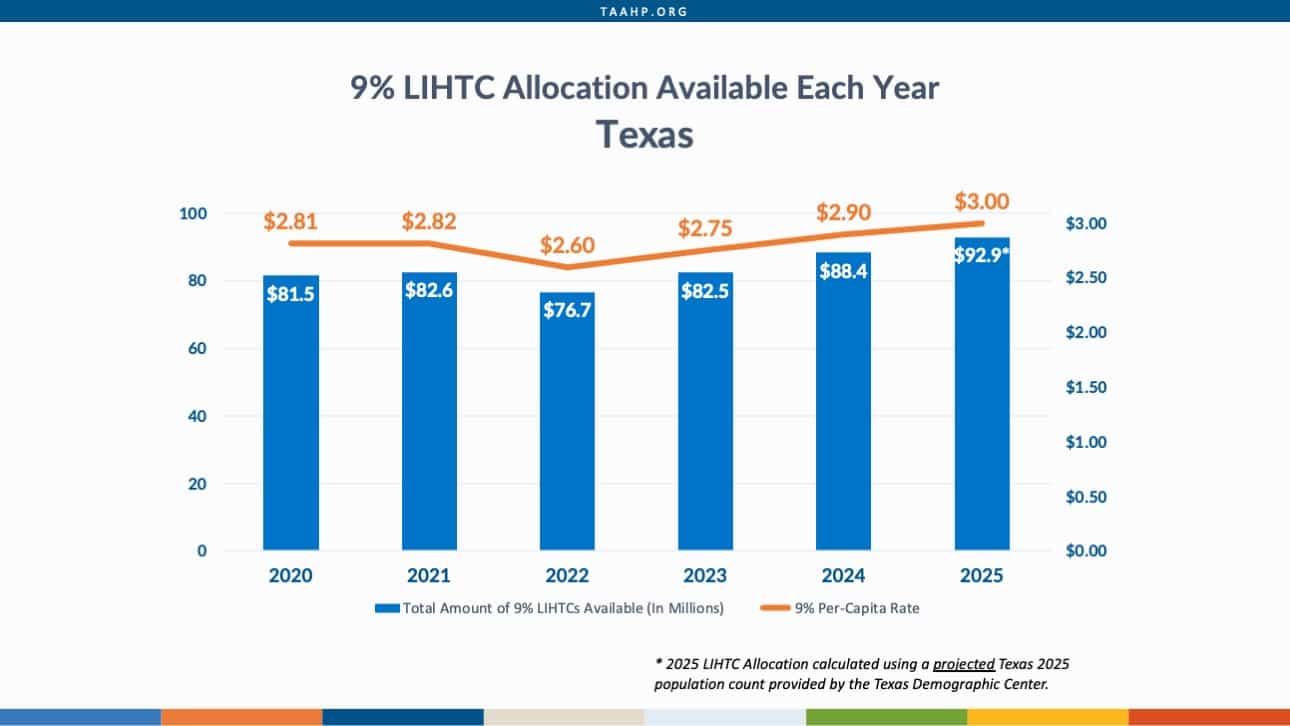
In its announcement, the IRS confirmed that the per-capita multiplier for the federal 9% LIHTC will increase to $3 for the first time, marking a 10-cent increase from the previous year. In conjunction with this adjustment, the small-state minimum for the 9% LIHTC will also rise to $3,455,000, up from $3,360,000 in 2024. This change represents a notable milestone in the effort to enhance affordable housing financing across the country.
The updated multiplier means that the amount used to determine states’ housing credit ceiling will now be calculated as $3 multiplied by the state population. This increase is especially significant for states with larger populations, like Texas, as it allows for a greater allocation of resources to support the development and rehabilitation of affordable housing projects.
Texas – New 9% LIHTC Allocations Available Each Year
Growth of the per capita rate for calculating LIHTC caps and the total amount of 9% LIHTC available
Private Activity Bonds (PAB) Also See Increases
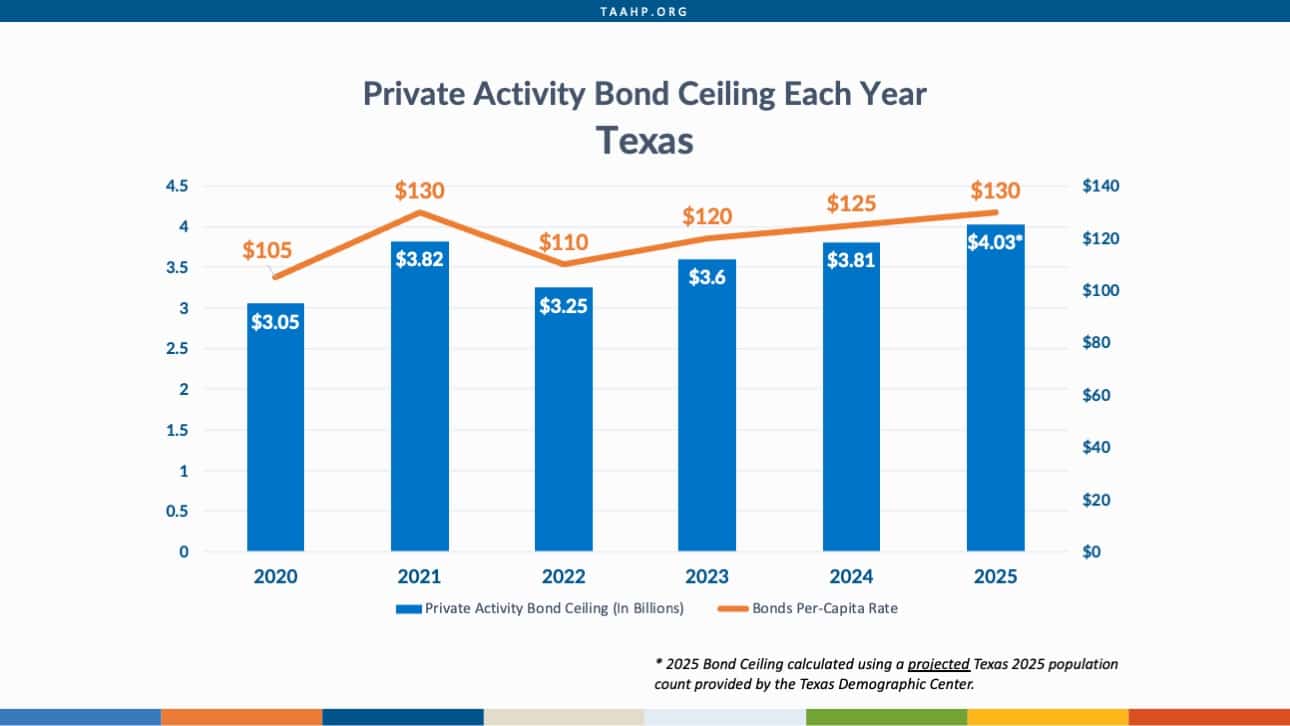
The IRS has also announced a $5 increase in the per-capita multiplier for private activity bonds, bringing it to $130 for 2025. Similar to the LIHTC multiplier, the PAB ceiling will be determined by either $130 multiplied by the state population or a minimum of $388,780,000—up from $378,230,000 this year. This change provides additional flexibility and funding potential for affordable housing.
Texas – New Private Activity Bond Allocations Available Each Year
Growth of the per capita rate for calculating PAB caps and the total amount of 9% LIHTC available
Rehabilitation Minimums on the Rise
In addition to the multiplier increases, the LIHTC rehabilitation per-unit minimum will see a rise to $8,500, a $200 increase from the 2024 amount. This adjustment is crucial for encouraging the rehabilitation of existing housing stock, ensuring that properties can be updated and maintained to provide safe, affordable living conditions.